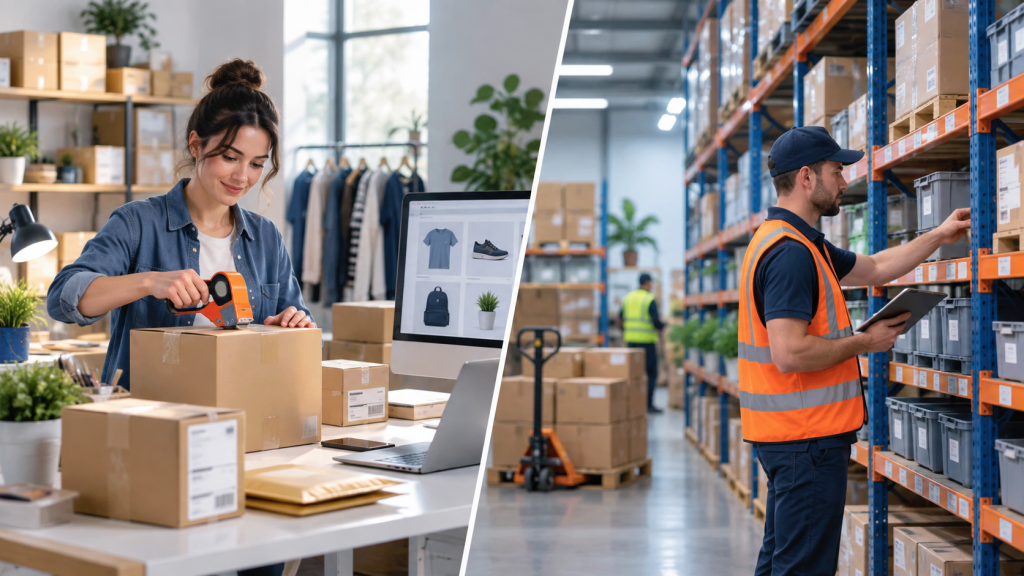
Every online store eventually faces the same strategic question: should products be shipped directly by suppliers, or should the store hold its own inventory? Both approaches can work well, and many successful businesses actually use a combination of the two as they grow.
Fulfillment Strategy Affects Trust and Profitability
How a store fulfills its orders shapes almost every part of the customer experience, from delivery speed to packaging quality. Choosing the right approach early can save significant time and money later.
What Is Dropshipping?
Dropshipping is a fulfillment model where a store sells products without holding physical inventory. When an order is placed, it is forwarded to a supplier or fulfillment partner, who prepares and ships the item directly, often from a specialized warehouse or manufacturing facility.
What Is Local Stock?
Local stock means the store purchases inventory in advance and holds it in its own or a domestic warehouse, shipping orders directly once a sale is made. This gives the seller more direct control over packaging, speed, and quality checks before an item reaches the customer.
Advantages of Dropshipping
Dropshipping requires significantly less upfront capital, since products aren’t purchased until a customer has already paid for them. It also allows a store to test a wide variety of products quickly, without the risk of unsold inventory sitting in storage.
Disadvantages of Dropshipping
Because items are shipped by external partners, delivery times can vary depending on the specific supplier and origin location. Sellers also have less direct control over packaging presentation and quality checks compared to handling stock personally.
Advantages of Local Stock
Holding local stock generally allows for faster, more predictable shipping times and gives the seller full control over packaging and unboxing experience, which can strengthen brand perception and customer satisfaction.
Disadvantages of Local Stock
This approach requires upfront capital to purchase inventory, along with ongoing storage costs and the risk that a product doesn’t sell as expected, tying up cash in unsold stock.
Hybrid Strategy: Test With Dropshipping, Scale With Stock
A common and effective approach is to launch new products through dropshipping to validate demand with minimal risk, then transition proven bestsellers into local stock once sales data supports the investment. This combines the low-risk testing of dropshipping with the improved delivery experience of local inventory.
Which Strategy Is Better for Beginners?
For most beginners, dropshipping offers a lower-risk entry point, allowing a new store owner to learn the fundamentals of marketing, customer service, and product selection before committing significant capital to inventory.
Conclusion
Neither approach is universally better. The right choice depends on available capital, risk tolerance, and how established a product line already is. Many of the most successful stores eventually blend both strategies as they grow.

Frequently Asked Questions
Is dropshipping riskier than holding stock?
It generally involves less financial risk upfront, though it can offer less control over shipping speed and packaging compared to local stock.
Can I switch from dropshipping to local stock later?
Yes, many stores start with dropshipping and move proven bestsellers into local inventory once demand is confirmed.
Which model gives faster shipping?
Local stock generally allows for faster and more predictable delivery, since the seller controls the warehouse and shipping process directly.
Discover practical products designed to make everyday life easier, fulfilled through a carefully managed network built for reliability.